What Does a Production Coordinator Actually Do?
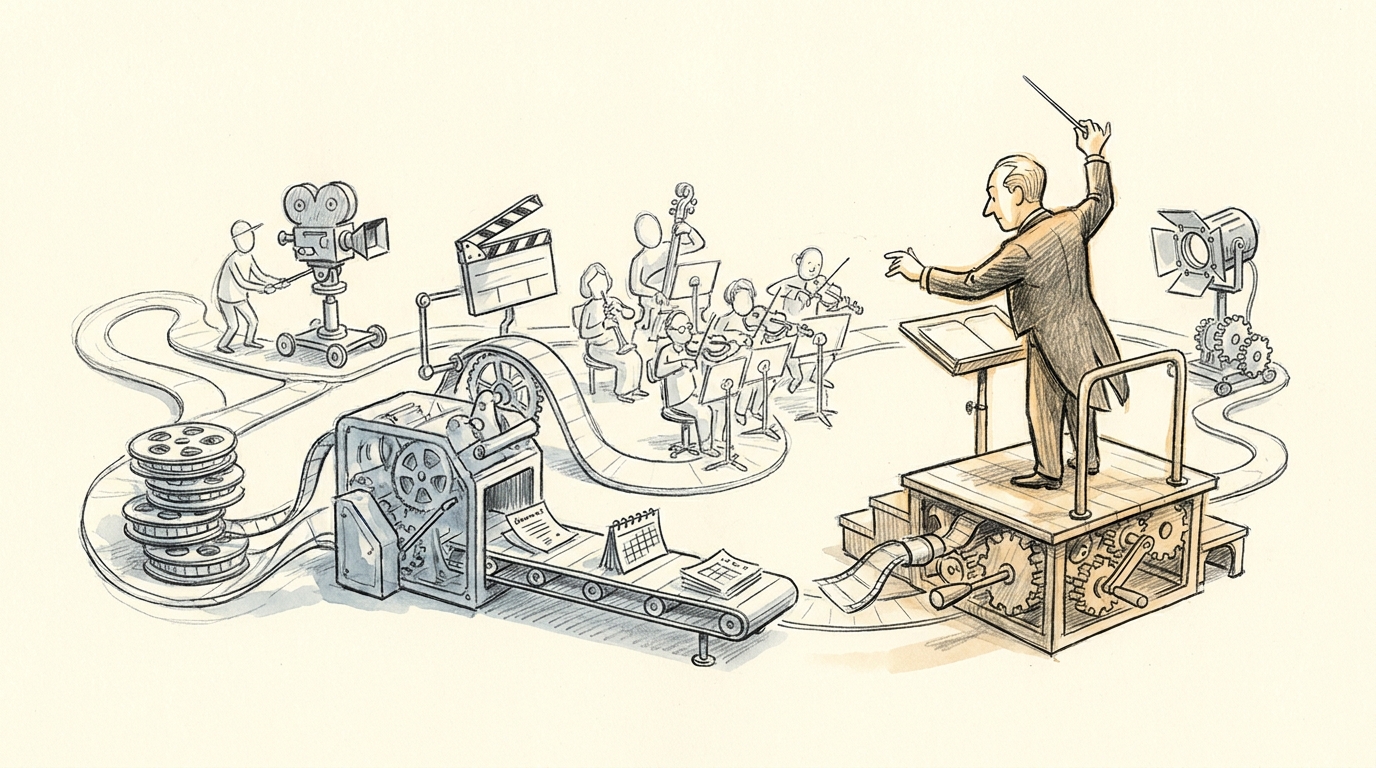
Production coordinators manage logistics, schedules, budgets, and communication between departments to ensure projects run on time and within scope across film, TV, events, or manufacturing.
A production coordinator resume needs to reflect this breadth. The role sits at the operational center of any production, whether you’re tracking call sheets for a TV series or managing materials flow on a factory floor. Understanding what coordinators actually own helps you write a resume that speaks the language hiring managers care about.
Core responsibilities across industries
Regardless of sector, production coordinators typically handle:
-
Scheduling and timeline management: Building and maintaining production calendars, distributing call sheets, and tracking milestones.
-
Budget tracking and cost control: Monitoring expenditures against approved budgets, processing purchase orders, and flagging overruns early.
-
Vendor and crew coordination: Sourcing vendors, negotiating rates, managing contracts, and ensuring the right people and materials arrive on time.
-
Cross-departmental communication: Acting as the information hub between creative leads, department heads, talent, and external partners.
-
Documentation and reporting: Maintaining production reports, compliance records, and status updates for stakeholders.
How the role differs: film vs. events vs. manufacturing
In film and TV, coordinators manage call sheets, location permits, crew travel, and equipment rentals. Daily schedules shift constantly, so adaptability matters more than almost anything else. In events production, the focus shifts to venue logistics, AV setup, vendor load-in schedules, and day-of execution. Manufacturing coordinators emphasize materials procurement, workflow optimization, quality control checkpoints, and production line scheduling. Your resume should reflect the specific vocabulary and priorities of your target sector.
What Skills Should a Production Coordinator Put on a Resume?
Essential skills include scheduling software proficiency, budget tracking, vendor coordination, cross-functional communication, problem-solving under pressure, and industry-specific tools like Movie Magic or SAP.
ZipRecruiter’s analysis of thousands of production coordinator job postings reveals exactly which skills employers mention most frequently. Here’s what their data shows:
| Skill | Share of Job Postings |
|---|---|
| Communication skills | 15.01% |
| Detail oriented | 12.66% |
| Collaboration | 10.48% |
| MS Office | 10.36% |
| Scheduling | 9.91% |
| Innovation | 9.23% |
| Vendor management | 8.40% |
| Technical skills | 8.33% |
| Customer service | 6.75% |
Communication skills top the list at 15.01%, appearing in nearly one out of every six postings. That tells you something: this role is fundamentally about keeping people informed and aligned.
Hard skills: software and technical competencies
Your hard skills section should include tools you’ve actually used, not a wish list. Resume-ready hard skills that appear consistently across coordinator job descriptions include:
-
Production scheduling and call sheet coordination [Source: Resumaker]
-
Resource allocation and workflow coordination
-
Logistics and materials management
-
Budget tracking and cost control
-
Contract management and purchase orders
-
MS Office, especially Excel (mentioned in 10.36% of postings) [Source: ZipRecruiter]
-
Industry tools: StudioBinder, Movie Magic, Float, Google Workspace, or SAP depending on your sector
Soft skills that separate good coordinators from great ones
Collaboration appears in 10.48% of job postings, and detail orientation in 12.66% [Source: ZipRecruiter]. These aren’t filler words. Production coordinators who can’t collaborate across departments or catch errors in call sheets create expensive problems. Other high-value soft skills include:
-
Problem-solving under deadline pressure
-
Multitasking across concurrent projects
-
Conflict resolution between departments or vendors
-
Adaptability when schedules change (and they always change)
Industry-specific certifications and tools
For film and TV, familiarity with entertainment payroll systems, SAG-AFTRA protocols, and tools like Movie Magic Budgeting or EP Scheduling signals industry fluency. Manufacturing coordinators benefit from Lean Six Sigma certification or ERP system experience (SAP, Oracle). Events coordinators should highlight CMP (Certified Meeting Professional) credentials or experience with Cvent and similar platforms.
How Do You Format a Production Coordinator Resume?
Use reverse-chronological format with clear section headers, quantified achievements in each role, ATS-friendly keywords from job descriptions, and a skills section that balances technical and interpersonal competencies.
Reverse-chronological vs. functional: which works for production
Multiple resume experts recommend reverse-chronological order for production coordinators [Source: Enhancv]. This format works because hiring managers want to see your most recent, most relevant experience first. Functional resumes, which group skills instead of listing jobs in order, tend to raise red flags with recruiters who suspect you’re hiding gaps. The exception: if you’re making a dramatic career change, a hybrid format that leads with a skills summary before listing experience chronologically can bridge the gap.
Section order and what to prioritize
For each role, include the job title, company or production name, location, dates (month and year), and 3 to 6 bullet points focusing on what you owned and the outcomes you achieved. Enhancv suggests 3 to 5 concise bullets per entry, while Zety recommends up to 6 bullet points per job, prioritizing achievements [Source: Enhancv]. A strong section order looks like this:
-
Professional summary (3 to 4 lines)
-
Work experience (reverse chronological)
-
Skills (split into technical and interpersonal)
-
Education and certifications
-
Additional sections (languages, relevant volunteer work, portfolio links)
ATS optimization without keyword stuffing
Pull exact phrases from the job description you’re targeting. If the posting says “vendor management,” use that phrase, not a synonym like “supplier relations.” Place keywords naturally in your summary, experience bullets, and skills section. Resumeio.com’s ATS-optimized templates are designed to pass automated screening while staying visually clean for human reviewers, which matters in production roles where attention to detail is part of the job itself.
What Should Go in a Production Coordinator Resume Summary?
A strong summary states years of experience, specific production environments, key coordination achievements with metrics, and relevant software expertise, all in 3 to 4 sentences tailored to the target role.
Summary vs. objective: what production hiring managers prefer
Objectives (“Seeking a position where I can grow…”) waste space. Summaries prove value immediately. Zety’s production coordinator sample demonstrates this with a summary that includes managing a team of 20 production assistants and maintaining 100% budget adherence [Source: Zety]. The formula that works, as recommended by career site Himalayas: [Years of experience] + [Specialization] + [Key skills] + [Top achievement].
Here’s what that looks like in practice:
“Production Coordinator with 5+ years in film and TV production, skilled in scheduling, vendor coordination, and budget tracking, who reduced overtime costs by 18% while supporting 30+ crew members across simultaneous shoots.”
How to tailor your summary to different production sectors
For film and TV, emphasize crew sizes, episode counts, and budget ranges. Enhancv’s sample references coordinating multi-location TV shoots with crews of 30 to 60 and managing budgets up to $400K per season [Source: Enhancv]. For manufacturing, lead with production volume, cycle time improvements, and quality metrics. For events, highlight simultaneous event management, attendee counts, and vendor relationships. The key is matching your summary’s language to the industry’s priorities.
How Do You Quantify Production Coordinator Achievements?
Quantify by citing projects managed, budget sizes, schedule adherence rates, vendor relationships maintained, cost savings achieved, or team size coordinated, using concrete numbers that demonstrate coordination impact.
Zety notes that you should “focus on stating some of your biggest accomplishments and add numbers,” because numbers “help visualize your actual impact” [Source: Zety]. Enhancv advises production coordinators to quantify scope and ownership by including team sizes, budgets managed, and simultaneous projects, emphasizing outcomes such as on-time delivery, cost savings, and efficiency improvements [Source: Enhancv].
Metrics that matter in film and TV production
Instead of “coordinated schedules,” write something like: “Coordinated 12 concurrent shoots, improving on-time delivery to 98% and reducing reschedules by 30%” [Source: Enhancv]. Strong film and TV metrics include:
-
On-time shoot day rate (e.g., 98% on-time delivery) [Source: Enhancv]
-
Budget adherence (e.g., 100% budget adherence over multiple seasons) [Source: Zety]
-
Crew size managed (e.g., 25-person cross-functional crew)
-
Viewership or engagement impact (e.g., 22% increase in viewership over 3 years) [Source: Zety]
-
Cost savings from vendor negotiation (e.g., 12% average cost savings) [Source: Enhancv]
Manufacturing and events: different numbers, same principle
Manufacturing coordinators should track cycle time reduction, defect rates, and production volume. A bullet like “Reworked vendor scheduling and procurement timing, cutting rush shipping costs by 22% and saving $18,000 annually” translates coordination work into business value. Events coordinators can cite attendee satisfaction scores, vendor on-time arrival rates, or budget variance percentages. The principle stays the same: replace vague claims with specific numbers.
When qualitative achievements matter more than metrics
Some coordination wins don’t have clean numbers. Solving a last-minute location crisis, managing a difficult vendor relationship that kept a production on track, or building a new communication protocol that other teams adopted. These stories still belong on your resume. Frame them as problem-action-result statements, even without percentages. “Resolved permitting conflict 48 hours before shoot date, preventing $50K location change” tells a compelling story without a percentage.
Should You Include Production Assistant Experience on a Coordinator Resume?
Yes, include production assistant roles but frame them to highlight coordination responsibilities, leadership moments, and skills that transfer directly to coordinator-level work rather than purely task-based duties.
The transition from production assistant to coordinator is one of the most common career paths in production. Your PA experience isn’t a liability. It’s proof you understand the ground-level operations that coordinators manage.
How to reframe PA experience for coordinator applications
Focus on moments where you stepped beyond basic PA duties. Did you manage a section of the call sheet? Coordinate vendor deliveries when the coordinator was unavailable? Train new PAs? These are coordination skills in action. Rewrite bullets to emphasize ownership and outcomes:
-
Before: “Assisted with daily call sheets and crew communication.”
-
After: “Prepared and distributed daily call sheets for 85+ crew members, maintaining 98% on-time start across a 50-day shoot” [Source: Enhancv].
Which PA responsibilities to emphasize vs. omit
Emphasize anything involving scheduling, vendor contact, budget awareness, document management, or cross-department communication. Omit purely physical tasks (running errands, making copies) unless they demonstrate problem-solving. If you managed equipment check-out logs, that’s inventory management. If you coordinated lunch orders for 60 crew members within a per-person budget, that’s vendor coordination and budget tracking. Reframe the language to match coordinator-level job descriptions.
What Are Common Production Coordinator Resume Mistakes?
Common mistakes include generic job descriptions without metrics, omitting industry-specific software, failing to tailor keywords to each application, listing duties instead of achievements, and neglecting to show problem-solving examples.
The “duties dump” problem
Enhancv reports that most production coordinator drafts fail because they read like task logs and bury scheduling, vendor, and delivery impact under generic bullets [Source: Enhancv]. Writing “Created call sheets” or “Coordinated vendors” tells a hiring manager nothing about how well you did it or what happened as a result. Every bullet should answer the question: “So what?” Turn “Managed production schedules” into “Managed production schedules for 8 concurrent projects, keeping all within 3% of budget.”
Software and tools: what to list and what to skip
List software you’ve used in a professional context and that appears in your target job descriptions. MS Office appears in 10.36% of production coordinator postings [Source: ZipRecruiter], so it belongs on your resume, but specify Excel proficiency rather than just “MS Office.” Skip consumer tools (Canva, personal social media) unless the role specifically requires them. For film and TV, include StudioBinder, Movie Magic, or EP Scheduling. For manufacturing, list ERP systems by name.
Tailoring for ATS without losing human readability
Keyword-stuffing a skills section with every term from a job posting backfires. ATS systems have grown more sophisticated, and human reviewers immediately notice when a resume reads like a keyword salad. Instead, integrate terms naturally into your experience bullets. If the posting mentions “vendor management” (found in 8.40% of postings) [Source: ZipRecruiter], use that exact phrase in a bullet that describes a real vendor management achievement.
Production Coordinator Resume Example
A strong production coordinator resume includes a targeted summary, quantified achievements in each role, a balanced skills section with technical and soft skills, and clear formatting that passes ATS screening.
Annotated example: what makes this resume work
Below is an annotated example with callouts explaining each section’s purpose:
JORDAN REYES
Los Angeles, CA | [email protected] | (555) 234-5678 | LinkedIn: linkedin.com/in/jordanreyes
PROFESSIONAL SUMMARY
Production Coordinator with 4+ years coordinating multi-location TV shoots (crews 30 to 60) and managing budgets up to $400K per season. Track record of 98% on-time shoot days and 12% average cost savings through vendor negotiation. Proficient in StudioBinder, Movie Magic Budgeting, and advanced Excel.
↳ Why it works: Follows the [Years] + [Specialization] + [Key skills] + [Top achievement] formula. Includes two quantified results and names specific tools. Tailored to TV production.
EXPERIENCE
Production Coordinator | Bright Harbor Productions | Los Angeles, CA | Mar 2023 to Present
-
Coordinated 15+ productions per quarter, maintaining 97% on-time delivery across scheduling, call sheets, and vendor handoffs
-
Managed production logistics for a 25-person cross-functional crew, reducing schedule conflicts by 40% through tighter handoff tracking
-
Reworked vendor scheduling and procurement timing, cutting rush shipping costs by 22% and saving $18,000 annually
-
Streamlined production reporting workflow, reducing status-update turnaround from 2 days to same-day
↳ Why it works: Every bullet leads with a verb, includes a number, and shows an outcome. No “responsible for” language.
Production Assistant | Crestline Media | Los Angeles, CA | Jun 2021 to Feb 2023
-
Prepared and distributed daily call sheets for 85+ crew, maintaining 98% on-time start across a 50-day shoot
-
Tracked materials and WIP status across multiple projects, lowering missing-component incidents by 35%
-
Assisted coordinator with budget reconciliation for $1.2M annual production budget, identifying $8K in duplicate vendor charges
↳ Why it works: PA experience is framed around coordination responsibilities, not errands. The budget bullet shows financial awareness.
SKILLS
Technical: StudioBinder, Movie Magic Budgeting, EP Scheduling, MS Excel (advanced), Google Workspace, SAP basics
Coordination: Vendor management, production scheduling, budget tracking, logistics planning, contract management
Interpersonal: Cross-functional communication, problem-solving under pressure, team collaboration, conflict resolution
↳ Why it works: Skills are grouped into three clear categories. Technical tools are named specifically. Interpersonal skills mirror the top keywords from job postings.
EDUCATION
B.A. in Film Production | California State University, Northridge | 2021
Alternative formats for different production sectors
Manufacturing coordinators should replace film-specific tools with ERP systems and replace “call sheets” with “production schedules” and “work orders.” Events coordinators should emphasize venue logistics, attendee management, and AV coordination. The structure stays the same. The vocabulary changes. Resumeio.com offers templates built for roles that blend technical and creative skills, with formatting that passes ATS screening while remaining visually clean for human reviewers.
Ready to build yours? Build your production coordinator resume with Resumeio.com’s ATS-optimized templates designed for creative and technical roles. Start with a format that hiring managers actually read.
Frequently Asked Questions
Here are answers to the most common questions about writing a production coordinator resume that stands out in both ATS screening and human review.
How long should a production coordinator resume be?
One page is standard for coordinators with fewer than 10 years of experience. If you have extensive credits across multiple production types, a second page is acceptable, but every line should earn its space with quantified achievements rather than filler.
What’s the most important skill for a production coordinator resume?
Communication skills appear in 15.01% of production coordinator job postings, making them the single most requested skill by employers [Source: ZipRecruiter]. Pair communication with detail orientation (12.66%) and collaboration (10.48%) for the strongest impression.
Should I include a portfolio or reel link on my resume?
For film and TV coordinators, a link to an online portfolio or IMDb page adds credibility. Manufacturing and events coordinators typically don’t need one. If you include a link, place it in your header next to your contact information so it’s easy to find.
How do I handle employment gaps on a production coordinator resume?
Production work is often project-based, so gaps between gigs are normal in the industry. Use month-and-year date formatting rather than exact days, and list freelance or short-term projects under a single “Freelance Production Coordinator” heading to show continuity.
Can I use the same resume for film and manufacturing production coordinator roles?
You shouldn’t. While core skills like scheduling, budget tracking, and vendor management overlap, the tools, terminology, and metrics differ significantly. Tailor your skills section and experience bullets to match each sector’s job descriptions.
What metrics should I include if I’m new to coordination?
Even entry-level coordinators can quantify crew sizes supported, number of call sheets distributed, on-time start rates, or budget amounts tracked. Enhancv recommends quantifying scope and ownership even in junior roles [Source: Enhancv].
Do production coordinator resumes need a cover letter?
Industry practitioners typically recommend including one, especially when applying to studios or production companies where culture fit matters. A cover letter lets you explain career transitions, highlight a specific project story, or address why you’re targeting that particular company.
How often should I update my production coordinator resume?
Update after every completed project or production. Add new metrics, tools, and achievements while they’re fresh. This habit prevents the common problem of scrambling to remember details when a new opportunity appears.